What best describes your situation?
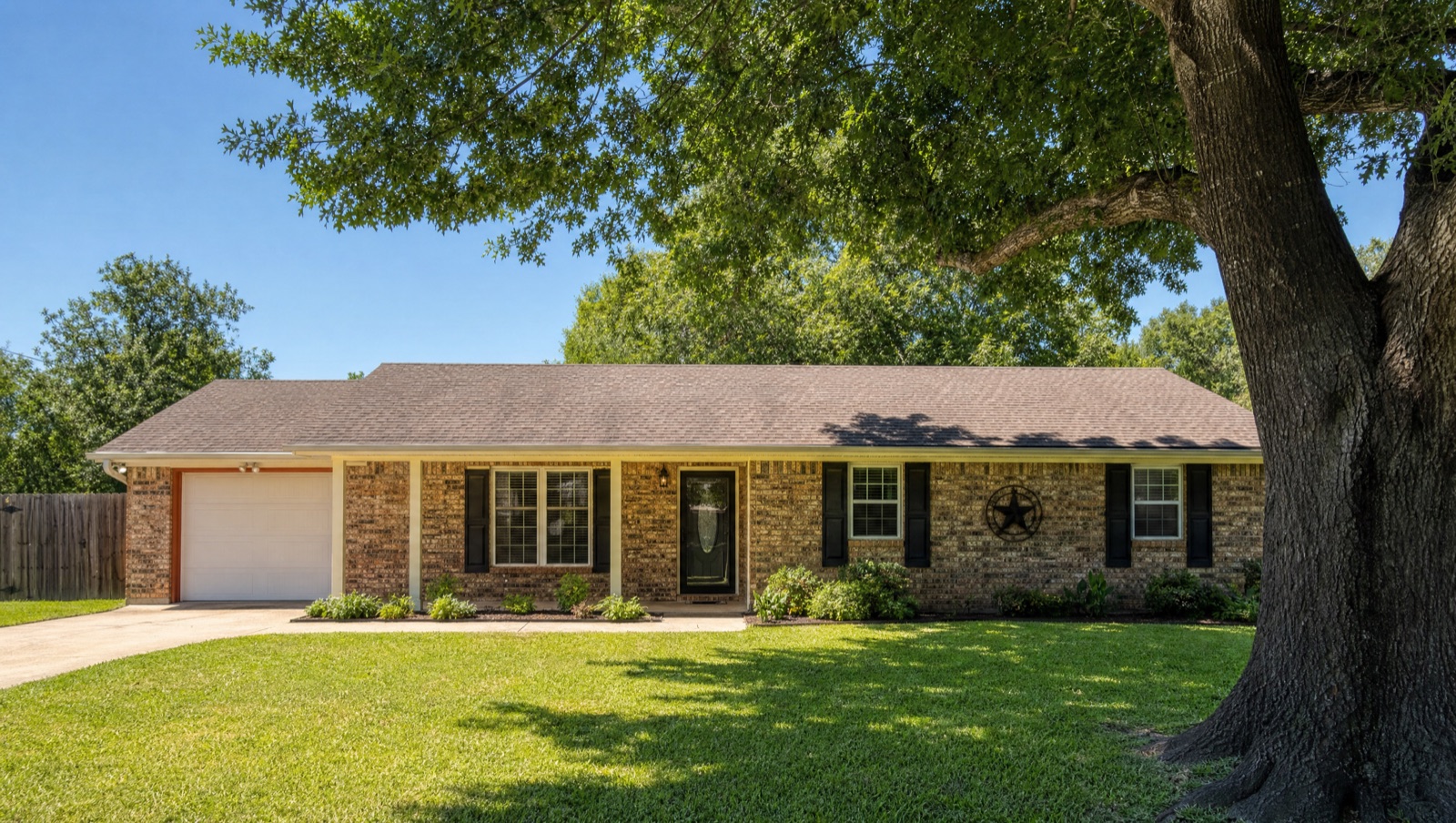
You lose the exemption and the 10% appraisal cap. The cap is the expensive one. What Tax Code 11.13, 11.43, and 23.23 require, and what to do before May 1.

Yes, in almost every case. The residence homestead exemption requires that the property be occupied as your principal residence. Once you move out and lease the home to someone else, you no longer qualify, and Texas Tax Code § 11.43(g) requires you to notify the appraisal district in writing before May 1 of the following year.
Most owners know this in outline. What surprises them is the second loss, which is larger than the first and arrives quietly. Proper Home Management is a property manager, not a law firm and not a CPA. The statutes below are cited so you can read them yourself. Confirm with your own tax advisor and your county appraisal district before you act on any of it.
Tax Code § 11.13(j)(1) defines a residence homestead as a structure that is owned by an individual, designed for human residence, used as a residence, and occupied as the individual's principal residence by an owner. That last clause is the one that ends when you sign a lease with somebody else.
There is a narrow exception. Under § 11.13(l), a home does not lose its homestead character during a temporary absence of less than two years, provided the owner does not establish a different principal residence and intends to return. Military service and residence in a health or aging care facility are treated separately and more generously.
Owners sometimes read that exception as covering a rental. It generally does not. An owner who moves to a new house and leases the old one has established a different principal residence, which is exactly what the exception excludes. The exception is written for a deployment or a hospital stay, not for a change in how the asset is used.
The exemption is the visible loss. The appraisal cap is the expensive one.
Under § 11.13(b), a residence homestead carries a $100,000 school district exemption, and most counties, cities, and hospital districts layer local option exemptions on top. Losing those raises your taxable value in a single step, and the step is easy to calculate.
Under § 23.23(a), a residence homestead also carries a limit on how fast its appraised value can rise: no more than 10% per year over the prior year's appraised value, plus the value of new improvements. Under § 23.23(c), that limitation expires on January 1 of the first tax year in which neither the owner nor the owner's spouse qualifies for the § 11.13 exemption.
The exemption loss is a one-time step. The cap loss is a reset. If the home has been capped for several years in a fast market, the appraised value has been held below market value, and removing the cap lets the district move the appraised value straight to market in one year.
As a principle: the exemption is a discount on the number, and the cap is a brake on how fast the number moves. Losing the brake usually costs more than losing the discount.
These figures are made up to show the shape of the arithmetic. They are not a projection for any property, and your county's rates and local option exemptions will differ.
| Line | As a homestead | As a rental, year one |
|---|---|---|
| Market value | $450,000 | $450,000 |
| Appraised value (capped at 10% growth for four years) | $370,000 | $450,000, cap removed |
| School district exemption | ($100,000) | $0 |
| Taxable value, school district | $270,000 | $450,000 |
| At a 1.0% school rate | $2,700 | $4,500 |
In this illustration the exemption removal accounts for $1,000 of the increase and the cap removal accounts for $800, in the first year alone. The exemption number stays roughly the same every year afterward. The cap number keeps growing, because the property is now reappraised to market annually with no ceiling.
Run your own version of this table before you decide to rent rather than sell. Your appraisal district publishes both your market value and your capped appraised value on its website. The gap between those two numbers is the part most owners have never looked at.
Texas puts the duty on the owner. § 11.43(g): a person who receives an exemption that is not required to be claimed annually shall notify the appraisal office in writing before May 1 after entitlement to the exemption ends.
If you do not, § 11.43(h) authorizes the chief appraiser to investigate and cancel the exemption, with written notice within five days of cancellation. § 11.43(i) then allows the district to add the escaped value back to the appraisal roll for any of the five preceding years, treated as omitted property under § 25.21. Back taxes follow, along with penalty and interest as provided elsewhere in the Tax Code.
This used to be enforced unevenly. It no longer is. § 11.43(h-1) requires every appraisal district to run a program of periodic review confirming that each homestead exemption recipient still qualifies. Districts also cross-reference rental listings, utility records, and mailing addresses. A five-year back assessment on a house that has quietly been a rental is a bad way to discover the rule.
For some owners, this arithmetic is the argument for selling instead of renting, and we would rather you run the numbers than sign with us and regret it in April.
If the capped value on your house sits far below market, if your equity position is strong, and if the rent your address supports is thin against the new tax bill, the property may not work as a rental at all. That outcome is not rare in Austin and parts of DFW, where cap gaps ran wide through 2021 and 2022. We would rather tell you that in the first conversation than manage a property that loses money for you.
What we will not do is tell you the exemption survives a rental because it makes the pro forma look better. It does not survive, and an owner who finds that out from a back assessment finds out from us second.
Rates, local option exemptions, and cap gaps vary by county, by school district, and by address. We have written the mechanism, not your number, and the mechanism is the part that does not vary.
We are also not the right advisor for the second half of this question. Whether the deductibility of property tax, depreciation, and the eventual capital gains treatment make renting better than selling is a tax question, and it turns on your income, your basis, and your holding period. That is a conversation with a CPA. We can tell you what the property will rent for and what it costs to run. We cannot tell you what it does to your return.
Texas appraises as of January 1. If the home is not your principal residence on January 1 of a given tax year, you do not qualify for that year. Moving out in July generally means the current year is fine and the next year is not.
If the home remains your principal residence, the exemption generally continues. Partial rental of a home you occupy is a different situation from converting the property, though the appraisal district may look at how much of the structure is producing income. Ask them directly.
Only if you have not established a different principal residence, per § 11.13(l). If you have moved into another home you own or rent, the exception generally does not apply. Intent alone is not enough.
Increasingly, yes. § 11.43(h-1) requires periodic review of every granted exemption, and districts also work from rental listings and mailing address changes. Assume it surfaces, and note that the five-year lookback means it does not have to surface quickly to be expensive.
Those attach to a residence homestead, so converting the property affects them as well. The rules for over-65 ceilings and their transfer to a new homestead are their own topic. Take that one to your appraisal district and your CPA.
Property tax on a rental is generally treated as an operating expense against rental income, which is a materially different treatment from the capped personal deduction that applied while the home was your residence. Your CPA should confirm how it lands on your return.
Proper Home Management leases and manages single-family homes across Dallas-Fort Worth, Houston, Austin, and San Antonio, plus the surrounding metro areas. We have managed Texas rentals since 2019, under Texas broker license #9015593.
Converting a residence into a rental changes three things on the same day: your tax position, your insurance, and your lease. We have written up the second one in landlord insurance for a Texas rental property. For the numbers on the third, see the real cost of self-managing, or email hello@properhomemanagement.com with the address and we will tell you what it rents for.
Email hello@properhomemanagement.com and we will answer.